
-
 Technology Portfolio
Versigent draws on the most innovative and optimized technologies to create a full range of advanced power, signal and data distribution systems.
Technology Portfolio
Versigent draws on the most innovative and optimized technologies to create a full range of advanced power, signal and data distribution systems. -
Signal & Data
Signal and data network technologies connect key systems, handling everything from simple control signals to large data flows.
-
Power
Regardless of powertrain, today’s vehicles rely on extensive power distribution capabilities to function.
-
Working With Us
With Versigent, our customers get a partner that deeply understands their design and execution needs.
-
Design
Versigent has the boldness, creativity and versatility to design innovative and unexpected solutions for your most complex requirements
-
Execution
Versigent excels at manufacturing efficiency, automation and execution. It’s an integral part of everything we do.
-
About
Versigent is a global leader in intelligent electrical architectures, delivering solutions at speed with a legacy of innovation and expertise.
-
Senior Leadership
Versigent’s senior leadership team brings deep industry expertise and a focus on innovation to drive solutions at speed.
-
Investors
Visit Versigent’s Investor Relations Site.
-
Sustainability
We deliver solutions of the highest quality and reliability – designed, developed and manufactured responsibly – that transform society.
-
Technology Portfolio
Versigent draws on the most innovative and optimized technologies to create a full range of advanced power, signal and data distribution systems.
-
Signal & Data
Signal and data network technologies connect key systems, handling everything from simple control signals to large data flows.
-
Power
Regardless of powertrain, today’s vehicles rely on extensive power distribution capabilities to function.
-
Working With Us
With Versigent, our customers get a partner that deeply understands their design and execution needs.
-
Design
Versigent has the boldness, creativity and versatility to design innovative and unexpected solutions for your most complex requirements
-
Execution
Versigent excels at manufacturing efficiency, automation and execution. It’s an integral part of everything we do.
-
About
Versigent is a global leader in intelligent electrical architectures, delivering solutions at speed with a legacy of innovation and expertise.
-
Senior Leadership
Versigent’s senior leadership team brings deep industry expertise and a focus on innovation to drive solutions at speed.
-
Investors
Visit Versigent’s Investor Relations Site.
-
Sustainability
We deliver solutions of the highest quality and reliability – designed, developed and manufactured responsibly – that transform society.
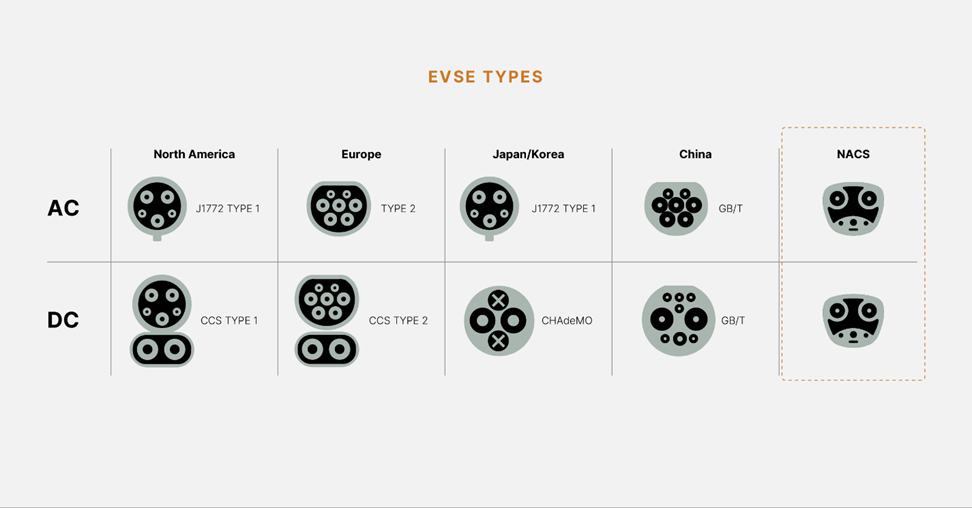
The North America Charging Standard (NACS) is a charging connector interface standard for electric vehicles that Tesla Inc. developed and has made available for use by other charging network operators and automakers.
In 2012, Tesla developed what it referred to as “the Tesla charging connector” as a proprietary charging interface for its own vehicles. The company has used the system on all of its vehicle models since its initial release. In contrast, the majority of automotive OEMs use the Combined Charging System standard— CCS1 in North America and CCS2 in Europe — for DC fast charging.
However, Tesla has expanded its charging network rapidly and now operates about 60 percent of all direct-current fast chargers in the United States.
In November 2022, Tesla changed the name of the Tesla charging connector to the North American Charging Standard and made the specifications available to other manufacturers. Since then, several major OEMs have announced plans to equip future vehicles with NACS-compatible charging inlets. In June 2023, SAE International announced that it would standardize the connector, helping to ensure consistency across the industry.
The most striking difference between NACS and CCS is the size of the charging interface. The NACS interface is much smaller because it uses the same pins for both AC and DC charging. This shift in charging interface affects the system’s architecture and wiring as a whole — not just the charge cord and the inlet. Because AC and DC pins are shared, the power must be managed by control electronics that can safely switch between the two modes via harness splicing, harness fusing, contactors, electrical centers or switching in the onboard charger (OBC). This can also affect the high-voltage wiring systems that distribute power from the inlet to the battery pack via the OBC and other power distribution devices.
There are a number of safety mechanisms specified in NACS to protect the end user and achieve the functional safety that automotive applications require, such as preventing the amount of heat generated during charging from exceeding safe operating limits.
NACS and CCS use the same communications protocol between the EV and the charging station. This allows the vehicle and charging station to agree on charging parameters and ensure a safe charge.

Working With Versigent
Our customers get a partner that deeply understands their design and execution needs.
Careers
Our strength is our people, driven by a passion for quality, reliability and engineering excellence.
View Related Jobs